Most people think the Sound No.2 is “the person backstage with the radio mics”.
Fair.
Radio mics take up a large part of the job.
But a good Sound No.2 does far more than tape mics to actors and change batteries.
They keep the backstage sound department running. They know where every mic is. They know which actor sweats through a capsule by scene three. They know which quick change needs help, which pack needs checking, and which problem needs fixing before the Sound No.1 even hears about it.
If the Sound No.1 runs the mix from front of house, the Sound No.2 runs the backstage sound world.
When the job goes well, most people barely notice.
When the job goes badly, everyone notices.
What Is a Sound No.2?
A Sound No.2 is the second-in-command in a theatre sound department.
The Sound No.1, often called the Head of Sound or operator, mixes the show. The Sound No.2 works backstage and supports the running of the show from the deck.
On a musical, the Sound No.2 usually looks after:
- Radio mics
- Mic fitting
- Mic checks
- Battery changes
- Mic swaps
- Backstage speakers
- Band foldback checks
- Cue lights or comms checks
- Troubleshooting
- Show paperwork
- Helping actors with sound issues
- Supporting the Sound No.1
The role changes depending on the size of the show.
On a small show, the Sound No.2 might do everything backstage alone.
On a bigger musical, there might be a Sound No.2, Sound No.3, Sound No.4, and extra radio mic dressers.
But the principle stays the same.
The Sound No.2 protects the show from backstage sound problems.
The Sound No.2 Is the First Line of Defence
The Sound No.1 sits at the desk and mixes what comes out of the speakers.
The Sound No.2 deals with the reason something might not reach the desk in the first place.
That includes:
- A mic pack switched off by mistake
- A loose connector
- A sweaty capsule
- A broken cable
- A flat battery
- A mic moved during a quick change
- A crackle in a head mic
- A transmitter falling out of a pouch
- An actor forgetting to collect a handheld mic
A good Sound No.2 spots problems early.
They do not wait for the mix position to shout on comms.
They listen.
They watch.
They check.
They think ahead.
The best Sound No.2s fix small problems before they become show stops.
The Main Jobs of a Theatre Sound No.2
The Sound No.2 role changes from show to show, but these jobs appear often.

1. Preparing Radio Mics
Before the show starts, the Sound No.2 prepares the radio mics.
This usually means:
- Checking each transmitter
- Checking each capsule
- Fitting fresh batteries
- Making sure packs are labelled
- Making sure mics are clean
- Testing every channel
- Checking RF and audio signal
- Placing mics in the correct preset positions
This part of the job needs care.
A wrongly labelled pack causes chaos.
A weak cable ruins a scene.
A flat battery ruins trust.
The audience never sees this work, but the show depends on it.
2. Fitting Mics to Actors
Mic fitting looks simple from the outside.

It is not.
You need to place the mic where it sounds good, stays secure, and does not annoy the actor.
You also need to work around wigs, hats, costumes, sweat, movement, quick changes and personal comfort.
Some actors like a mic on the forehead.
Some prefer the cheek.
Some need a hairline position.
Some need a backup mic.
Some sweat through everything.
Some hate tape.
Some have sensitive skin.
A Sound No.2 needs patience here.
You are working close to someone’s face, hair, neck or costume. Respect matters.
Be calm.
Be clear.
Ask before moving hair, costume or clothing.
Tell the actor what you are doing.
A good mic fitting starts with sound, but it also needs trust.
3. Running Mic Checks
Before each show, the Sound No.2 usually runs mic checks with the cast.
This is not only about hearing “one, two, one, two”.

You are checking:
- Is the mic working?
- Is the pack on?
- Is the signal clean?
- Is the capsule noisy?
- Is the actor loud enough?
- Is the mic in the right place?
- Does anything crackle when they move?
- Does the pack need changing?
- Has the mic been fitted correctly?
Mic checks need speed and focus.
You often have cast, crew, wardrobe, wigs, stage management and musicians all trying to get ready at the same time.
Keep it calm.
Keep it moving.
Do not turn mic check into a social hour.
4. Battery Changes
Battery changes sound easy.
They are one of the easiest things to get wrong.
A Sound No.2 needs to know:
- Which packs need batteries
- When each battery change happens
- Where the actor is at the time
- How long the change takes
- What costume the pack sits in
- Whether the actor has a quick change at the same time
- Whether the mic needs checking after the change
Good paperwork saves you here.
You do not want to guess battery changes mid-show.
You need a clear plot, a clean system and a calm head.
5. Mic Swaps
Sometimes a character needs a different mic during the show.
This might happen because:
- An actor changes costume
- A character wears a hat or wig
- A performer gets wet
- A scene needs a handheld mic
- A backup mic replaces a failed one
- A pack has to move to another position
Mic swaps need planning.
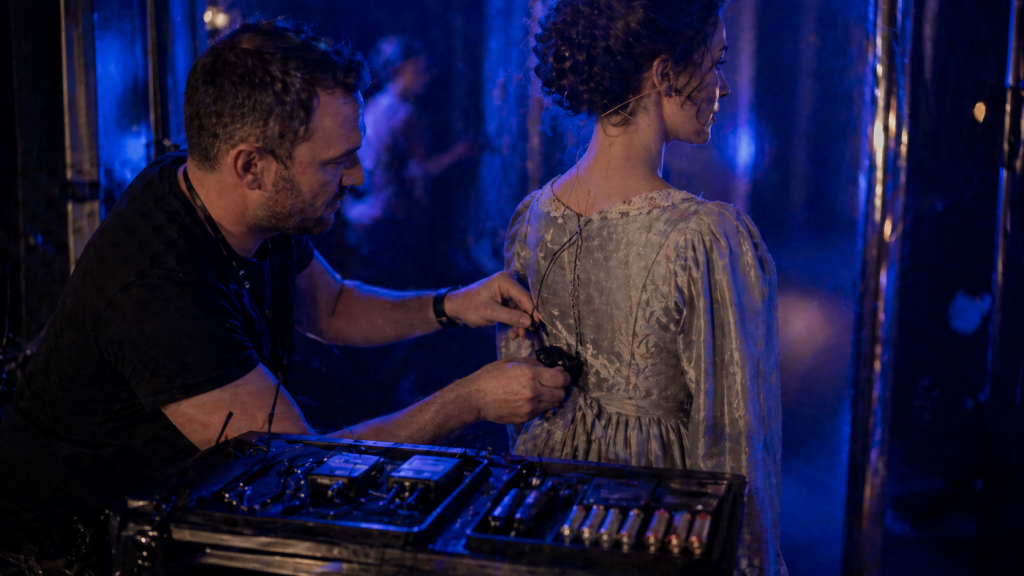
You need to know where the actor enters, exits, changes costume and stands backstage.
You also need to know when you have enough time to make the swap.
A ten-second mic swap in a dark wing during a quick change is not the moment to start thinking.
Plan it in tech.
Write it down.
Practise it.
What Does a Sound No.2 Do During Tech?
Tech is where the Sound No.2 earns their stripes.

During tech, you learn the show from the inside.
You track:
- Mic positions
- Costume changes
- Quick changes
- Pack placements
- Actor traffic backstage
- Mic swaps
- Battery changes
- Backup mic options
- Comms calls
- Foldback notes
- Scene changes
- Band issues
- Sound cue problems
You also build the show paperwork.
This might include:
- Mic plot
- Battery plot
- Preset list
- Show running notes
- Quick change notes
- Pack allocation
- Capsule allocation
- Spare mic plan
- Fault log
- Consumables list
Tech is slow, then suddenly fast.
You might sit for twenty minutes doing nothing, then get thirty seconds to solve a problem.
Stay ready.
Do not drift.
Do not hide in the wings with your phone.
Watch the show.
Learn the traffic.
Learn where the pressure points sit.
The more you learn in tech, the smoother the run feels.
What Does a Sound No.2 Do During the Show?
During the show, the Sound No.2 keeps the backstage sound track running.
A typical show might include:
- Pre-show mic checks
- Fitting mics
- Checking comms
- Checking backstage speakers
- Placing handheld mics
- Running battery changes
- Swapping packs
- Fixing mic faults
- Listening for crackles
- Helping with quick changes
- Cueing actors for mic collection
- Reporting problems to the Sound No.1
- Resetting kit after the show
The Sound No.2 also needs to stay calm when things go wrong.
And things will go wrong.
A mic will crackle.
A pack will fall.
A battery door will break.
An actor will miss a mic pickup.
A costume change will take longer than planned.
A dressing room speaker will fail.
Someone will say, “It was fine yesterday.”
That phrase belongs in the theatre sound hall of fame.
The job is not about never having problems.
The job is about solving them without panic.
The Difference Between Sound No.1, No.2 and No.3
People often get confused by theatre sound job titles.
Here is the simple version.
Sound No.1
The Sound No.1 usually mixes the show.
They are responsible for the sound of the performance from the audience’s point of view.
They deal with:
- Mixing cast
- Mixing band
- Sound cues
- System notes
- Show reports
- Department decisions
- Communication with stage management
- Maintaining the sound design
On many shows, the Sound No.1 is also the Head of Sound.
Sound No.2
The Sound No.2 runs the backstage sound operation.
They deal with:
- Radio mics
- Cast mics
- Battery changes
- Mic swaps
- Backstage faults
- Deck sound issues
- Supporting the Sound No.1
They are the Sound No.1’s eyes and hands backstage.
Sound No.3
The Sound No.3 usually supports the No.2.
They might help with:
- Mic fitting
- Battery changes
- Presets
- Handheld mics
- Backstage speakers
- Cable runs
- Radio mic checks
- Show resets
On some shows, the Sound No.3 has a full plot of their own.
On others, they assist where needed.
Every production works slightly differently.
Ask early.
Never assume.
Skills You Need to Be a Good Sound No.2
You do not need to know everything before your first No.2 job.
But you do need the right attitude.
These skills matter.
Organisation
A messy Sound No.2 creates problems.
Label your kit.
Keep paperwork up to date.
Know where your spares are.
Keep batteries under control.
Make reset lists.
Write things down.
Your memory will fail at the worst possible moment.
Paperwork will save you.
Calm Communication
You will deal with actors, stage management, wardrobe, wigs, musicians, crew and the Sound No.1.
Everyone has their own pressure.
Do not add noise.
Say what you need clearly.
For example:
“I need to check your mic cable before your next entrance.”
“I need this pack back after scene two.”
“I have a crackle on your mic, I’m swapping you to the spare.”
Clear beats clever.
Every time.
Good Ears
You need to hear problems before they become obvious.
Listen for:
- Crackles
- Dropouts
- Rustle
- Distortion
- Weak batteries
- Loose connections
- Sweat damage
- Bad mic placement
You do not need golden ears.
You need practical ears.
If something sounds wrong, check it.
People Skills
The backstage sound role is personal.
You work close to actors.
You ask them to wear kit on their body.
You might need to fix something while they are stressed, hot, tired or mid-change.
Be decent.
Be quick.
Be professional.
Do not make a performer feel like the problem.
Fix the issue and move on.
Technical Curiosity
Learn how the system works.
Do not only learn your own little plot.
Ask:
- Why is this capsule used here?
- Why is this pack placed there?
- Why does this actor have a backup?
- Why does this scene need a handheld?
- Why does this mic rustle in this costume?
- Why does this frequency drop out in this part of the stage?
The more you understand, the better your decisions become.
Common Mistakes New Sound No.2s Make
Every Sound No.2 makes mistakes.
The goal is to avoid repeat mistakes.
Here are the big ones.
Not Writing Things Down
Do not rely on memory.
Write every change down.
If a mic moves, update the plot.
If a battery change moves, update the plot.
If an actor changes costume, update the plot.
Old paperwork creates new problems.
Standing in the Wrong Place Backstage
Backstage traffic matters.
You need to know where you stand without blocking:
- Actors
- Crew
- Wardrobe
- Props
- Stage management
- Scene changes
- Flying pieces
- Quick changes
Find your position.
Stay useful.
Stay out of the way.
Waiting Too Long to Report a Fault
Do not hide problems.
If a mic crackles, tell the Sound No.1.
If a pack keeps failing, tell the Sound No.1.
If a battery change feels too tight, tell the Sound No.1.
Good communication prevents surprises.
Bad news early is useful.
Bad news late is a mess.
Blaming Actors
Sometimes actors forget things.
Sometimes they switch packs off.
Sometimes they sweat through mics.
Sometimes they knock capsules out of place.
You still need to handle it well.
Do not shame people backstage.
Solve the problem.
Build the relationship.
Then fix the system so it happens less.
Not Watching the Show
A Sound No.2 who only watches their own cues misses the bigger picture.
Watch entrances.
Watch exits.
Watch costume changes.
Watch who struggles.
Watch where actors wait.
Watch where packs get knocked.
Watch where sweat becomes a problem.
The show tells you what it needs.
Radio Mics, Sweat, Tape and Panic
Radio mics are a large part of the Sound No.2 job.
They are also tiny little drama machines.
Sweat gets in them.
Tape fails.
Capsules move.
Cables break.
Actors forget they are wearing them.
Costumes rub against them.
Wigs pull them out.
Hats crush them.
Quick changes destroy your careful fitting.
This is why a good Sound No.2 stays alert.
You need spares.
You need tape.
You need wipes.
You need spare cables.
You need spare capsules.
You need a plan for the actor who destroys a mic every show.
You need to know when to repair, when to replace and when to stop touching it because you are making it worse.
This comes with experience.
At first, you will feel like every crackle means disaster.
Later, you learn the difference between a small problem and a real one.
How to Get Your First Sound No.2 Job
If you want your first Sound No.2 job, start by learning the basics and getting near real shows.
Here are practical steps.
1. Learn Radio Mic Basics
Learn how radio mics work.
You need to understand:
- Transmitters
- Receivers
- Capsules
- Connectors
- Batteries
- RF signal
- Audio signal
- Frequency coordination
- Mic placement
- Sweat protection
You do not need to master all of it at once.
Start with the kit you see most often.
2. Ask to Shadow
Shadowing a Sound No.2 teaches you more than a textbook.
Watch how they:
- Fit mics
- Talk to actors
- Run checks
- Place packs
- Handle problems
- Keep paperwork
- Reset after the show
Ask questions at the right time.
Not during a quick change.
3. Take Small Jobs Seriously
Small fringe shows teach you a lot.
You might not have a full radio mic rig.
You might have old kit.
You might have no assistant.
Good.
You learn problem solving fast.
Do not wait for a big musical before you take the work seriously.
Small jobs build habits.
4. Learn from Wardrobe and Wigs
A Sound No.2 works closely with wardrobe and wigs.
Treat them well.
They often know where your mic problems will happen before you do.
Ask:
- Where does the costume rub?
- Where does the quick change happen?
- Where is the pack safest?
- Which wig placement leaves room for the mic?
- Which hat causes trouble?
Sound does not live alone backstage.
5. Be Easy to Work With
This matters more than beginners think.
People rehire sound crew who:
- Turn up on time
- Listen
- Learn
- Stay calm
- Write things down
- Help without fuss
- Admit mistakes
- Fix problems
- Respect actors
- Respect other departments
Technical skill matters.
Trust gets you hired again.
What Makes a Great Sound No.2?
A great Sound No.2 thinks ahead.
They do not wait for instructions all night.
They know the show.
They know the cast.
They know the risky moments.
They know when to speak and when to stay quiet.
They protect the Sound No.1 from problems, but they also keep them informed.
They build trust with the cast.
They work well with stage management.
They get along with wardrobe and wigs.
They keep the kit clean.
They keep the paperwork clear.
They stay calm when everything backstage gets loud.
The best Sound No.2s make the show feel safer.
Final Advice From a Head of Sound
If you want to become a Sound No.2, do not think of it as a junior job.
Think of it as a specialist backstage role.
You are responsible for the part of the sound system attached to human beings.
That means sweat, nerves, movement, quick changes, costumes, wigs, mistakes and live performance.
No two shows feel the same.
Some nights nothing happens.
Some nights everything happens at once.
Your job is to stay ready.
Learn the plot.
Respect the cast.
Look after the kit.
Tell the Sound No.1 what they need to know.
Write everything down.
And when something goes wrong, stay calm.
Because backstage, calm is a skill.
And a good Sound No.2 is worth their weight in batteries.